Global Chatbot
Real knowledge. Answers in context.
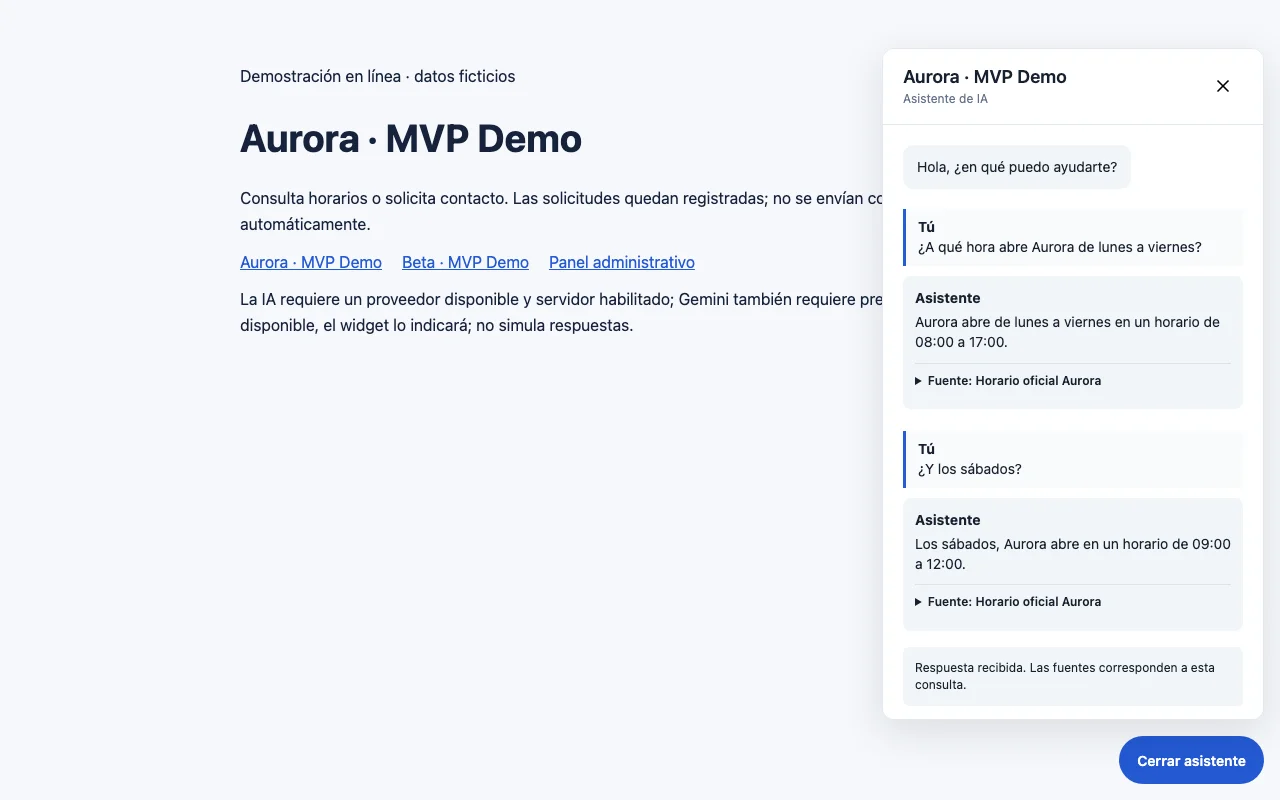
A business-adaptable assistant grounded in reviewed knowledge, with sources built into its answers.
The problem
Business information is often scattered across pages, documents and FAQs. A generic chatbot does not know which content is current or which business it belongs to. A good answer starts before the prompt.
What I built
- Built an isolated web widget and an admin panel to import, review and publish knowledge.
- Integrated hybrid semantic and text retrieval using PostgreSQL/pgvector, with Gemini for generation.
- Added tenant separation, usage limits, persistent conversations and consent-based contact requests.
How it works
- Reviewed, published sources
- Hybrid retrieval
- Business-grounded LLM
- Answer with citations
Engineering decisions
Publishing knowledge is deliberate.
Only reviewed, published content is used for answers. Drafts and retired versions must not be mistaken for current information.
Sources belong in the answer.
Retrieval provides relevant passages, and citations let users inspect the basis of a claim. Abstaining is preferable to inventing an answer.
Operations are part of the product.
Tenant isolation and usage accounting matter as much as the chat experience. The widget integrates without exposing server credentials.
Results and evidence
The assistant is deployed and active in production on the Paisajismo Muñoza website (paisajismomunoza.vercel.app), guiding visitors on landscape design and studio services. The repository documents the multi-tenant architecture on Vercel and Neon, hybrid retrieval with pgvector, and isolation and usage quota tests.
Scope and learnings
The widget handles informative guidance and consent-based contact inquiries. It does not include real-time ERP inventory or automatic human handoff. Sources are updated deliberately: the chatbot answers from reviewed knowledge rather than learning unverified from user chats.